
Joy is not a reward you earn after you've suffered enough.
- Christine Spencer

- 1 hour ago
- 7 min read

There is a moment that happens — and I think you know the one I mean — where everything is actually fine. The kids are okay. Work is manageable. Nobody is sick. Nothing is on fire. And instead of letting that land as good, your brain does the thing.
The other shoe is going to drop.
Something is coming. You can feel it. You know how this works. Good things are followed by hard things, and the harder you let yourself lean into the good, the further the fall when the hard arrives. So you hold back. You stay a little guarded. You let yourself feel almost all of the joy, but not quite all of it — just in case.
You have been doing this your whole life. Most of us have. And we don't even realize it.
Researcher Brené Brown gave it a name: foreboding joy. The experience of joy immediately followed by worry or dread. The feeling that being too happy is a vulnerability, a risk, a setup. That if you let yourself feel fully, unguardedly joyful, you are handing the universe ammunition it will eventually use against you.
"Joy is the most vulnerable emotion we experience," Brown says. "And if you cannot tolerate that level of vulnerability, joy actually becomes foreboding. We start dress rehearsing tragedy."
When I first heard her say that, I had to sit with it for a while. Because I could feel — in a very specific and uncomfortable way — the weight of all the joy I had held at arm's length over the years. All the moments I'd let myself feel almost enough of something good, but not quite all of it. Just in case.
She's right. And I'm not sure any of us got here by accident.
where the lie comes from
Somewhere along the way we absorbed a very specific message about joy. Not in one dramatic lesson but in a thousand quiet ones — the way rest had to be earned before it was acceptable, the way pleasure was something you deserved only after the list was done, the way wanting things for yourself was slightly embarrassing and definitely secondary to wanting things for other people.
Women absorb this message particularly thoroughly. We are trained from the time we are young to put ourselves last, to find our worth in service, to treat our own needs as the things that get attended to when everything else has been handled. Joy — the uninstructed, purposeless, just because kind of joy — sits somewhere near the bottom of that list. It sounds like frivolity. It sounds like selfishness. It sounds like someone who doesn't have enough to worry about.
And then, layered on top of all of that inherited conditioning, comes the foreboding. The learned wariness that good things come with a price. As my kids transitioned into adulthood and started building their own lives, I noticed a reflex: the moment something good happened for me, my brain would immediately check on them. Were they okay? Could they afford what they needed? Were they doing well enough that my joy wasn't somehow happening at their expense? Neither of them ever asked for this, ever discouraged me from anything, or would have said a single word to ruin the moment. The concern was entirely self-generated. The foreboding was entirely mine.
But knowing that didn't stop it from happening.

what it costs
Joy deprioritized doesn't just stay deprioritized. It atrophies.
When you consistently hold joy at arm's length — when you treat it as something to be earned, or something too dangerous to lean into fully — you gradually lose the capacity to access it even when you want to. The pinch-me moments stop landing. The things that should feel good feel flat. You're present for your life but not quite in it, standing slightly to the side of the joy that's theoretically available to you.
For me, this showed up in my creative life in a way I didn't see clearly until I looked back. I have always loved to make things. I have a room in my house — lovingly referred to as the "crap room" by my husband — that is dedicated entirely to crafting. If I see something in a store, my first thought has always been "I can make that." Making things was the way I processed the world, played with color and texture and ideas, and felt genuinely like myself.
As the small storms of midlife started accumulating, one of the first things that quietly fell away was the crafting. Not dramatically. Just gradually. The crap room got messier and less visited. The impulse to make things got quieter. And with it, something else got quieter too — my ability to notice the joyful moments and let them actually land.
This connection between joy and creativity isn't just something I felt. Research backs it up. A study of more than 12,000 journal entries found that creativity is positively associated with joy — and negatively associated with anger, fear, and anxiety. The relationship runs in both directions: joy fuels creative engagement, and creative engagement generates joy. When one diminishes, the other tends to follow. When I stopped making things, I stopped accessing joy as readily. And when I stopped practicing joy, making things felt harder to reach.
The color drains a little. The sparkle dims. It doesn't happen all at once — it happens the way everything in midlife seems to happen: slowly, quietly, until one day you look around and realize you've been living in a slightly grayer version of your life for longer than you knew.
And here's the cost beyond you personally: a woman running on empty, a woman who has systematically denied herself joy in service of everyone else, does not have more to give. She has less. The version of you that is fed and rested and genuinely alive is a better mother, partner, friend, colleague, human than the version grinding herself down out of some misguided sense that her needs matter least. Depleting yourself is not noble. It just means everyone gets less of you, including you.

the science
Here's what's happening in your body when you experience joy — and why it is not a luxury.
Joy triggers the release of dopamine, serotonin, endorphins, and oxytocin simultaneously. Dopamine activates your brain's reward and motivation systems, making you more likely to seek out the things that brought you joy again.
Serotonin creates a sense of calm well-being and social confidence. Endorphins produce the warm, euphoric feeling that follows laughter or physical pleasure. Oxytocin deepens social bonds and amplifies positive emotional states.
Research links frequent positive emotions — joy among them — to faster stress recovery, stronger immune function, improved cardiovascular health, and better long-term health outcomes. Joy is not decorative. It is physiologically functional. Your brain on joy is a brain that works better, recovers faster, and is more resilient under stress.
Here's the part that should make you pause: joy is less about achievement than about presence. It cannot be banked and retrieved later. It cannot be saved up for when you've earned it. It lives in the moment you allow yourself to actually feel it — and only there.
Which means the strategy of deferring joy until you've suffered enough, until you've done enough, until you deserve it — that strategy doesn't work. Not because it's morally wrong, but because it's neurologically impossible. Joy deferred is not joy saved. It's joy lost.
the permission
I saw something recently, author unknown, that I haven't been able to stop thinking about:
Calmness helps the mind see clearly.
Comparison reinforces your anxiety.
Patience creates space for growth.
Anger ignites fear-based reactions.
Joy appears in the present moment.
Joy appears in the present moment.
Not at the end of the list. Not when things calm down. Not when you've suffered sufficiently to deserve it. Now. In this imperfect, still-figuring-it-out, slightly chaotic present moment. That's where it lives. That's the only place it has ever lived.
So here is your permission slip, written by someone who spent too long waiting for one that was never going to arrive from anywhere outside of herself:
You do not have to earn joy. You never did. The earning requirement was never real — it was inherited conditioning and foreboding dressed up as virtue, and it has cost you more than you know.
What does unearned joy look like today? Not the big version. The small, immediate, available right now version. The Saturday morning disco ball light hitting the walls before anyone else is awake. The color in your house that makes it feel like it belongs to you. The office you built to make yourself smile every time you walk in. The craft room — yes, even the crap room — that exists because making things is one of the ways you access yourself. The outfit that is an expression of who you actually are rather than who seems acceptable.
These are not frivolous things. These are the things that keep the color in your life. The things that make the rest of it sustainable.
Joy is not the reward. Joy is the point.
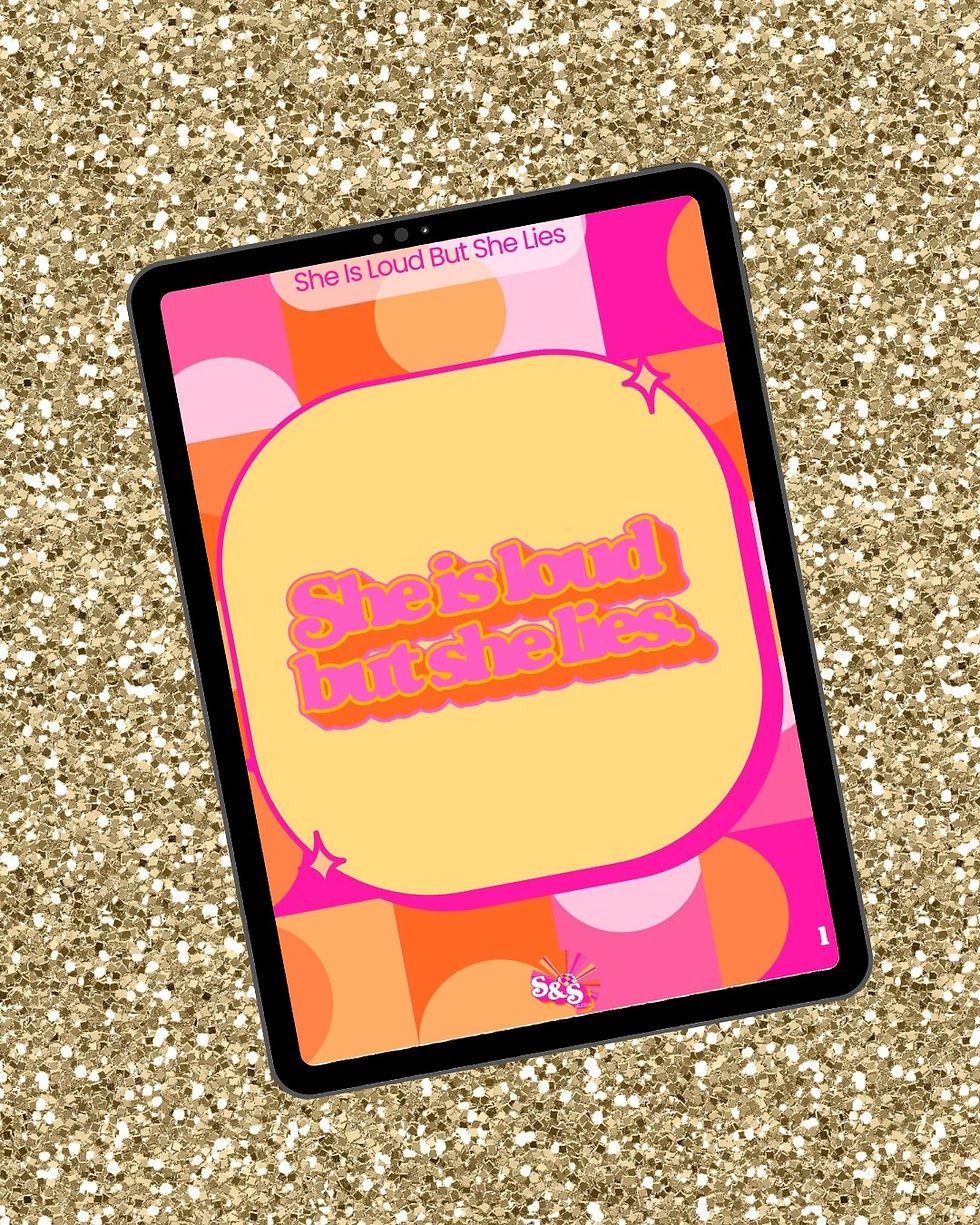
If the voice in your head is currently making the case that you haven't quite earned it yet, the Inner Light Affirmation Cards were built specifically for that conversation. Fifty cards, five categories, each one a direct response to something she actually says, because you deserve to have something to say back to her. She started it..
Where does foreboding joy show up for you? The moment that should feel good but doesn't quite land all the way. If you want to tell me, I'd genuinely love to hear it, and if you'd rather just sit with the question, that works too. I have a feeling I'm not the only one who knows exactly what I'm talking about. ✨


Comments